Free Webinar
How Speech-Language Pathologists Can Support Learning Across the Curriculum Through Create-to-Learn Pedagogy
Media literacy is often framed as critical thinking. What if it's also language work?
Students cannot analyze media messages, evaluate evidence, recognize bias, consider multiple perspectives, or create meaningful digital content without the language skills needed to interpret, discuss, and communicate meaning. Yet media literacy is rarely discussed through the lens of language development.
In this webinar, we'll explore media literacy as a language-mediated process and consider the role that school-based speech-language pathologists (SLPs) can play in supporting students' participation in media-rich learning environments. Drawing on research from media literacy education, language and literacy development, and communication sciences, we'll examine how create-to-learn pedagogy makes the language of media visible, explicit, and teachable across the curriculum.
Date
Thursday, December 3, 2026
Time
4:30 – 5:30 PM EST
Location
Online (Zoom)
Join Us to Discuss
- How might explicit instruction in media literacy vocabulary support participation?
- What role does media creation play in language development?
- How might SLP-teacher partnerships expand opportunities for learning in media-rich classrooms?
Through classroom examples and guided discussion, participants will explore how SLPs and educators can collaborate to support vocabulary development, discourse, inferencing, perspective-taking, critical thinking, and equitable participation for all learners, including multilingual learners and students with communication disorders.
We'll conclude by discussing three emerging research questions and inviting participants to join the conversation by imagining future directions for media literacy research, practice, and interdisciplinary collaboration.
This conversation will inspire practitioners and scholars to contribute a paper for a forthcoming special issue of Topics in Language Disorders.
About the Presenter
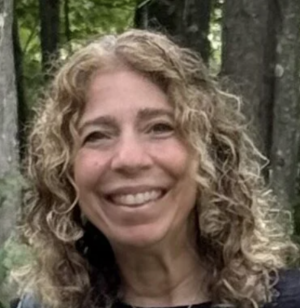
Sharon D'Antuono, MS, CCC-SLP
Assistant Clinical Professor, University of Rhode Island
Sharon D'Antuono is a speech-language pathologist and clinical educator with more than 20 years of experience in the public schools. She currently serves as an Assistant Clinical Professor at the University of Rhode Island, where she prepares master's students in speech-language pathology for clinical practice with children and adolescents. Sharon is also a doctoral student in Education whose research focuses on language and literacy development, media literacy, digital learning, and school-based practice. Her scholarship explores how create-to-learn pedagogies and digital literacy experiences can support communication, literacy, social-emotional development, and equitable participation for diverse learners, including multilingual learners and students with communication disorders. She is the guest editor of an upcoming special issue of Topics in Language Disorders focused on media literacy, communication disorders, and create-to-learn pedagogy.
Call for Papers · Topics in Language Disorders Special Issue
Media Literacy as Language Work: Media Literacy, Communication Disorders, and Create-to-Learn Pedagogy
Proposal Deadline
January 15, 2027
Proposal Length
300–500 words
Media literacy has become an educational priority in a digitally connected, media-saturated world. Students are expected not only to access information, but also to analyze, interpret, create, reflect, and communicate across multiple modes and platforms. Yet participation in media literacy activities depends heavily on language. Vocabulary, discourse, pragmatics, inferencing, narrative competence, and perspective-taking all play critical roles in helping learners engage with media messages and communicate meaning.
This special issue of Topics in Language Disorders explores the intersection of media literacy, communication disorders, multilingualism, language development, and create-to-learn pedagogy. We seek contributions that examine how educators, researchers, speech-language pathologists, and interdisciplinary teams can support learners in becoming effective communicators, creators, and critical participants in a media-rich society.
We are particularly interested in scholarship that considers media literacy as a language-mediated practice and examines innovative approaches to supporting communication, participation, and equity across educational settings. Contributions may focus on children, adolescents, or young adults across educational and clinical contexts.
Potential Topics
Potential topics include but are not limited to:
- Media literacy and communication disorders
- Create-to-learn pedagogy
- School-based SLP collaboration in media-rich classrooms
- Digital storytelling and narrative language development
- Media literacy and multilingual learners
- Critical media literacy and discourse development
- Social communication and media participation
- AI, communication, and media literacy
- Classroom-based language interventions related to media literacy
- Universal Design for Learning and media-rich instruction
- Prevention-oriented and MTSS approaches
- Early childhood media literacy and language learning
- Family engagement, digital literacy, and communication support
- Teacher-SLP partnerships in literacy and media education
- Equity, participation, and student voice in media-rich environments
Article Types
We welcome conceptual papers, literature reviews, research reports, clinical practice articles, case studies, and interdisciplinary perspectives that advance understanding of media literacy and communication. Consistent with the mission of Topics in Language Disorders, we welcome manuscripts that integrate research and clinical applications to support evidence-based, culturally responsive practice.
Who Should Contribute
We welcome submissions from speech-language pathologists, educators, literacy researchers, media literacy scholars, special educators, psychologists, teacher educators, and interdisciplinary teams whose work advances understanding of language, communication, and participation in media-rich learning environments.
Early-career scholars, clinician-researchers, and practitioner authors are especially encouraged to contribute.
Proposal Submission Process
Authors interested in contributing should submit a 300–500 word proposal outlining their proposed manuscript. Proposals will be reviewed to support development of a balanced issue and table of contents. Selected authors will be invited to submit full manuscripts for peer review through the Topics in Language Disorders submission system.
Send Questions and Proposals To
Sharon D'Antuono, MS, CCC-SLP
Guest Editor
Subject line: TLD Media Literacy Special Issue Proposal
Proposal deadline: January 15, 2027