The fourth stop on this European trip took me to Kastoria, in northern Greece, for the tenth anniversary of the Thessaloniki International Media Summer Academy (THISAM). I was invited to join the faculty by Professor Nikolaos (Nikos) Panagiotou, and I spent a week there that turned out to be one of the more clarifying experiences I've had in a while.
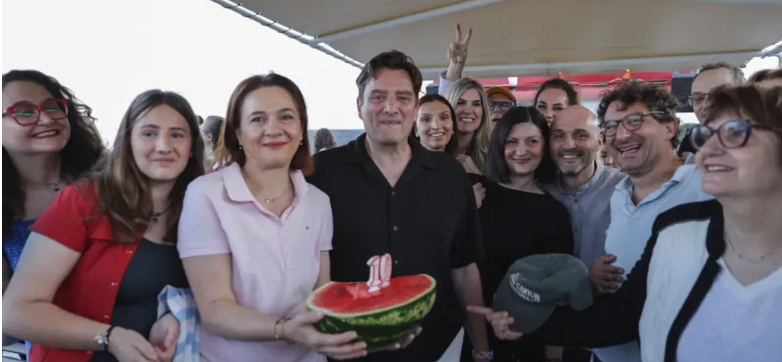
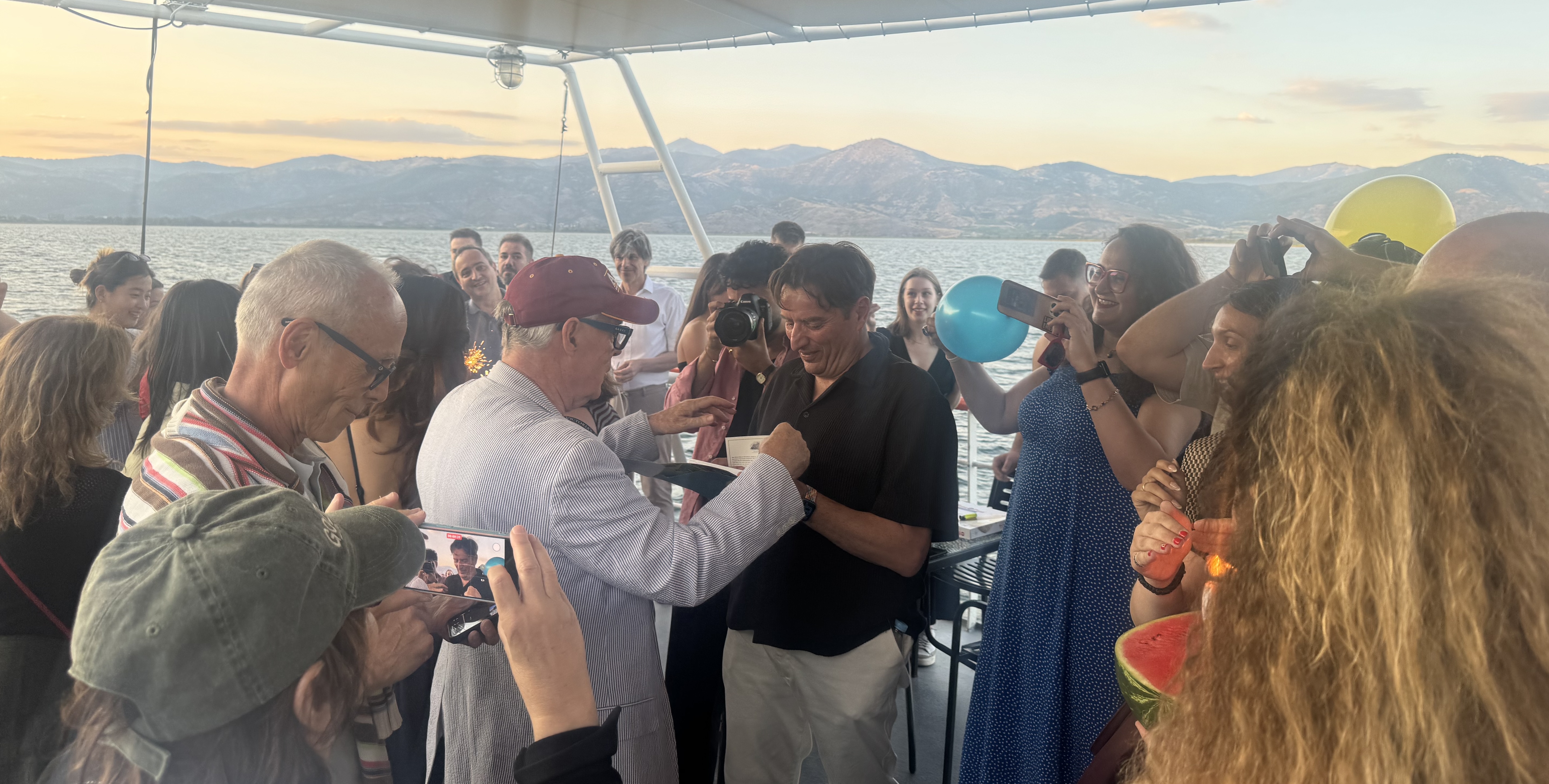
A tenth anniversary is a natural moment for an institution to take stock, and THISAM used it well. The academy left its home city for the occasion, setting up in Kastoria, a decision that shaped the entire week in ways that were not were accidental.
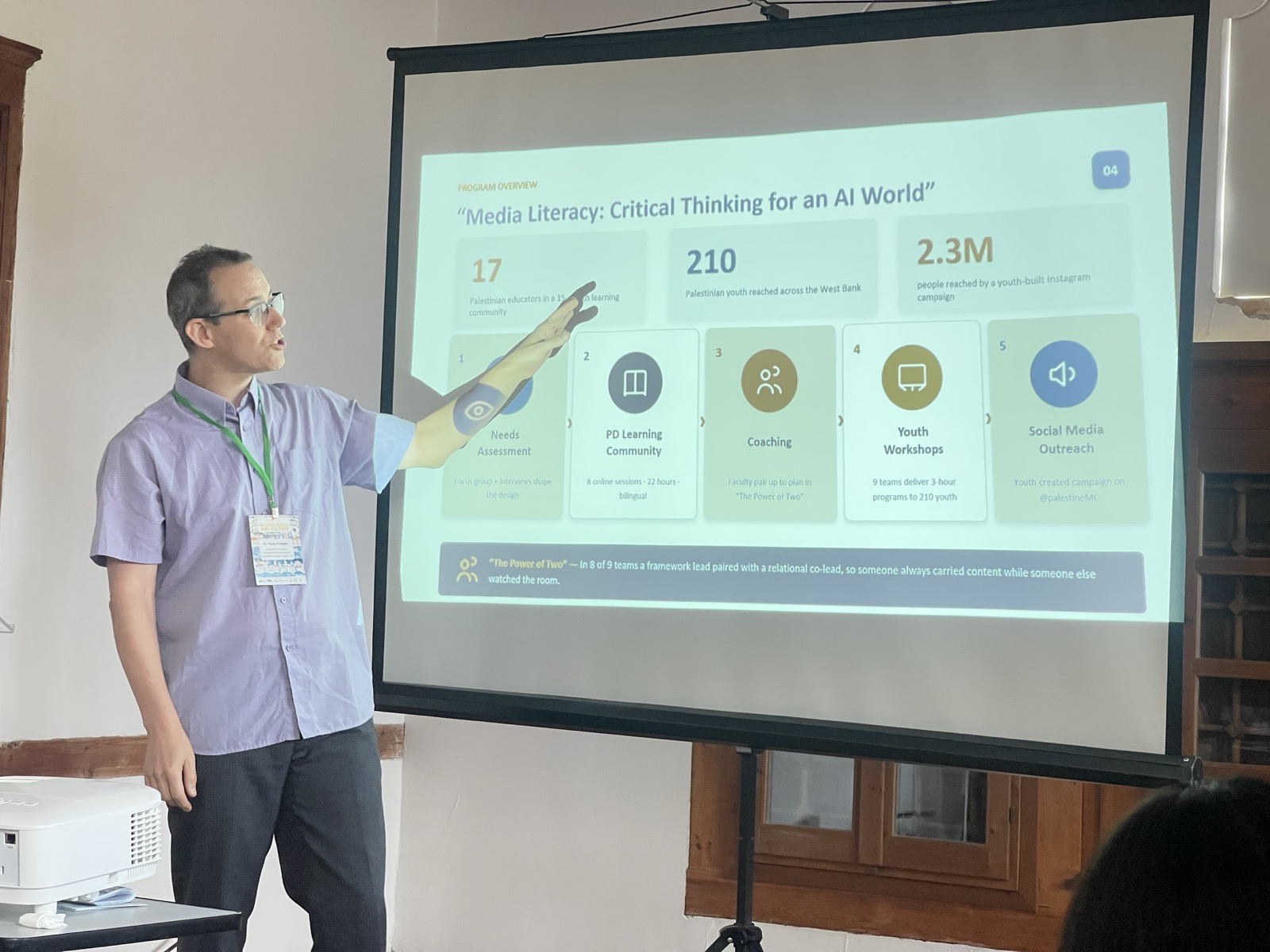 The week opened with the Global Media and Culture conference, where I presented the main findings from our work with colleagues in Palestine on a train-the-trainers program. The conversations that followed were substantive, and the two days gave me a useful window into research I wouldn't otherwise have encountered. In particularly a number of new initiatives on AI literacy in international contexts, where the questions are moving faster than most of our frameworks are.
At the conference I met Professor Christos Frangkonikolopoulos, who together with Nikos established the Peace Journalism Lab at the School of Journalism and Mass Media Communication at Aristotle University of Thessaloniki. The two of them have coordinated THISAM for the full ten years, and it was a genuine honor to be there for the celebration of what they've built. Sustaining a summer school of this character for a decade, across funding cycles, institutional shifts, and a pandemic, is an enormous achievement.
I also got to see colleagues and friends I don't see often enough. Sherri Hope Culver from Temple University and Remzie Shahini-Hoxhaj from the University of Prishtina each presented their work in media and information literacy. And I met several people for the first time, including Professor Shin Dong Kim, Director of the Academy of Film at Hong Kong Baptist University, and Dr. Peter Caks from the Institute of Media Communications at the University of Maribor.
The room itself was worth noting: graduate students from all over the world, alongside researchers making a consistent case for international dialogue as a practical necessity rather than a nicety. That framing held up across the whole week.
One session drew particular attention from the younger participants: a two-hour workshop titled "Winning Attention in the Digital Media Era," co-led by Avinash Mudaliar, Co-Founder and CEO of HT Labs and CEO of OTTplay, alongside Jatin Malhotra, whose background spans product strategy, innovation, and go-to-market roles at Oracle, Meta, and Reliance Jio. Watching a room of graduate students engage with attention economics from the perspective of people who build for it, rather than only critique it, was instructive.
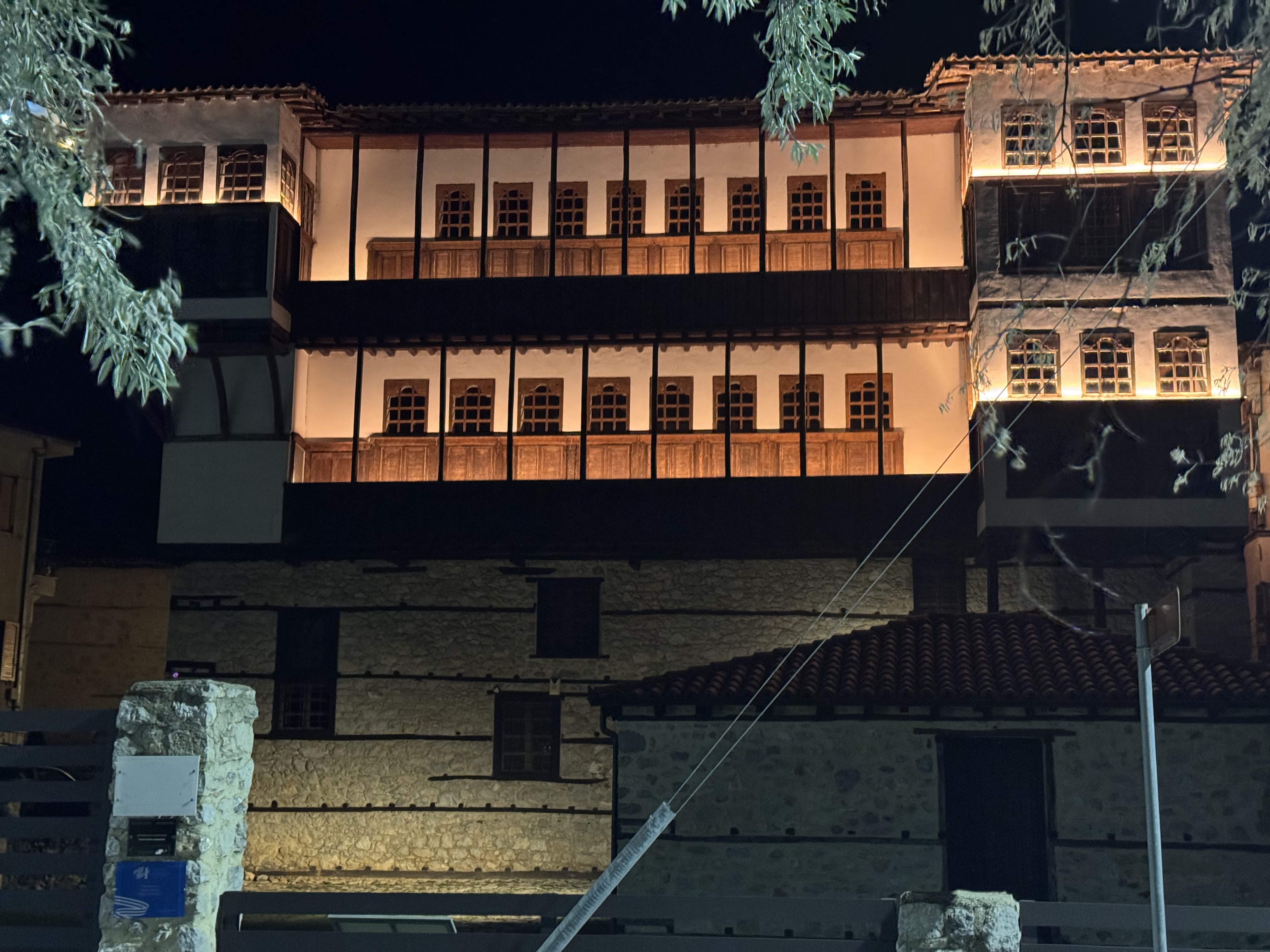
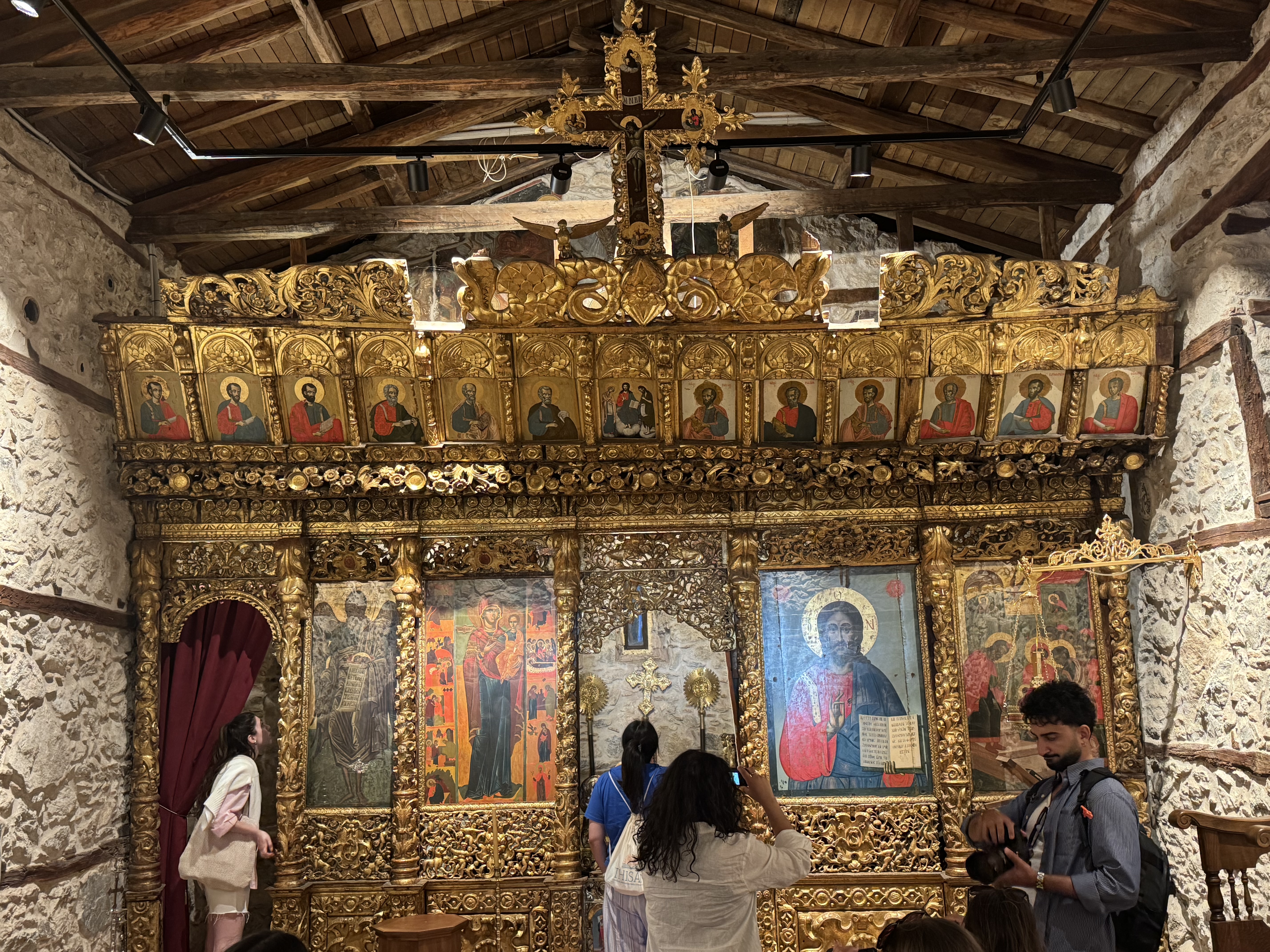 The conference took place in the Tsiatsiapas Mansion, a historic building where centuries of history meet the distinctive architecture of rural Greece. The original murals and wood panel work are remarkable, and the architectural detail throughout is intact enough that you can genuinely picture the life of a wealthy Kastorian family of the 17th and 18th centuries. There's something fitting about holding a conference on the future of media in a building that has already outlasted several futures.
In the evenings, the international participants ate together (very good Greek food), and long conversations about how those of us working in media and information literacy might actually address the challenges in front of us. A recurring thread: the younger generation arrives with real enthusiasm and motivation to improve things, and the question is less how to inspire them than how to make room for them in the work we're already doing.
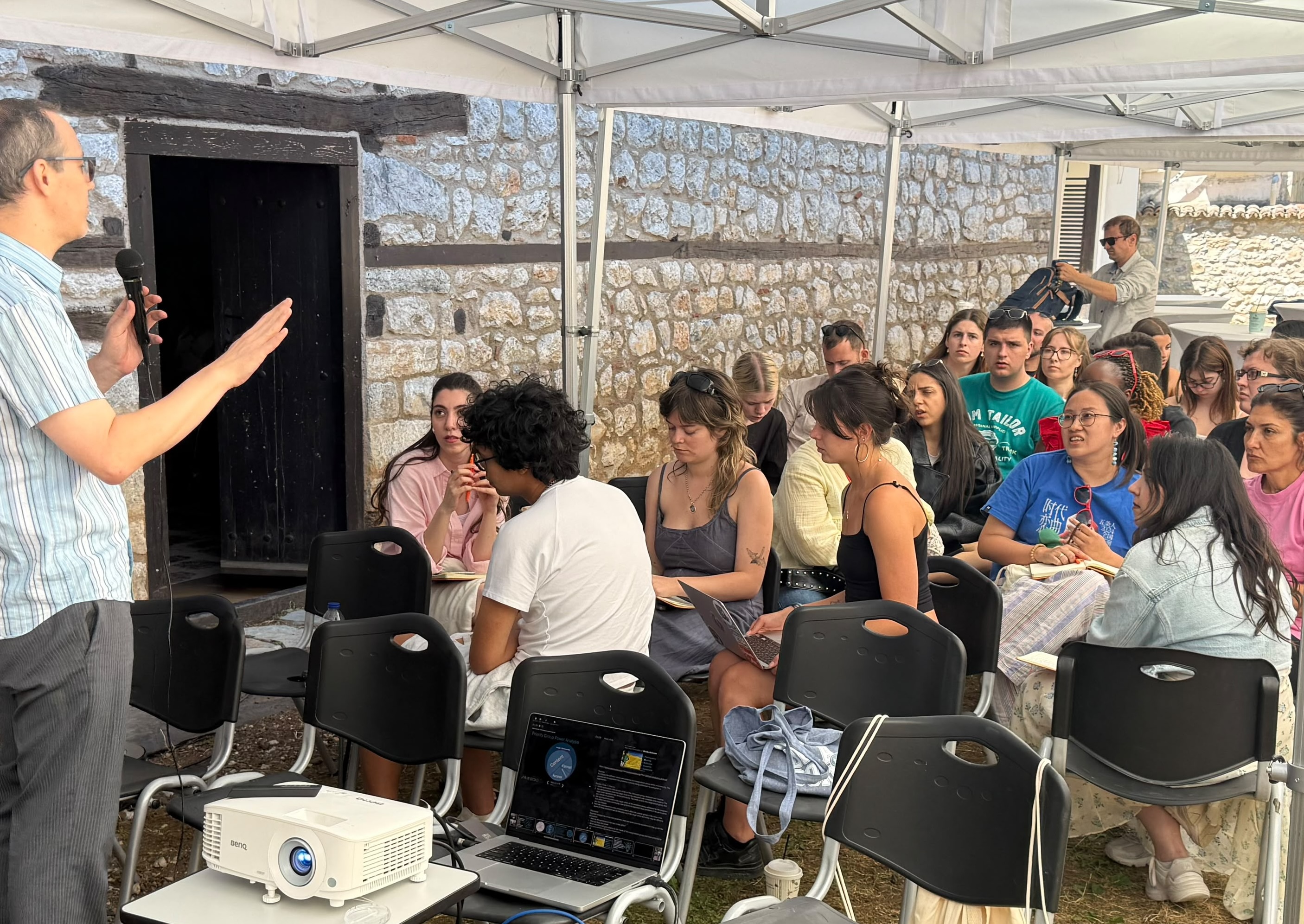 After two days, the event shifted from conference to summer school, and the character of it changed accordingly. What I appreciated most was watching the groups connect (Greek students, Chinese students, and Canadian students) and finding common ground with international students from other institutions. That mixing was not incidental to the program's design; it appeared to be the point.
It was in this phase that I learned about the work of journalist and Professor Aphrodite Salas of Concordia University in Montreal. Her work is based in Kiashke Zaaging Anishinaabek–Gull Bay First Nation and in the Inuit community of Inukjuak, and involves teams of students working collaboratively to document and share stories of Indigenous leadership and climate action. She documents both the challenges facing remote communities and the solutions community members are developing, including in partnership with the Canadian government. It is careful, patient work, and it stands as a model for what student-involved journalism can be when it's built on genuine relationships.
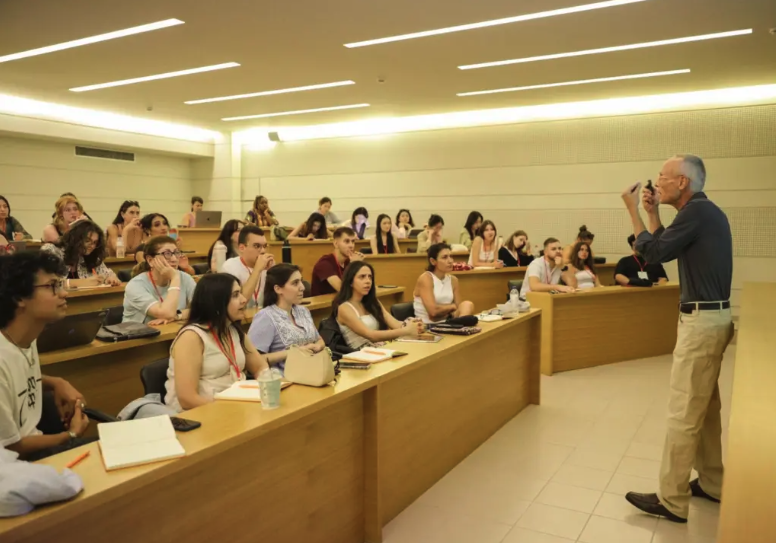 I was similarly struck by the lecture from photojournalist Dimitrios Bouras, who spoke about documenting humanity inside war zones. A student asked him where the motivation and devotion come from. His answer was that it comes from within: a commitment at the highest level, without which the career path isn't sustainable. It was an honest answer, and it landed with the room.
I also finally met in person Professor Tena Perišin from the Faculty of Political Science at the University of Zagreb and Professor William (Bill) Silcock, Emeritus Assistant Dean at Arizona State University. They initiated the summer institute by presenting the project the students would undertake: one built around journalistic inquiry into global issues of media and communication. For my part, I presented the PARIS model, my civic media framework, as a way of setting standards for youth activism in media-based projects.
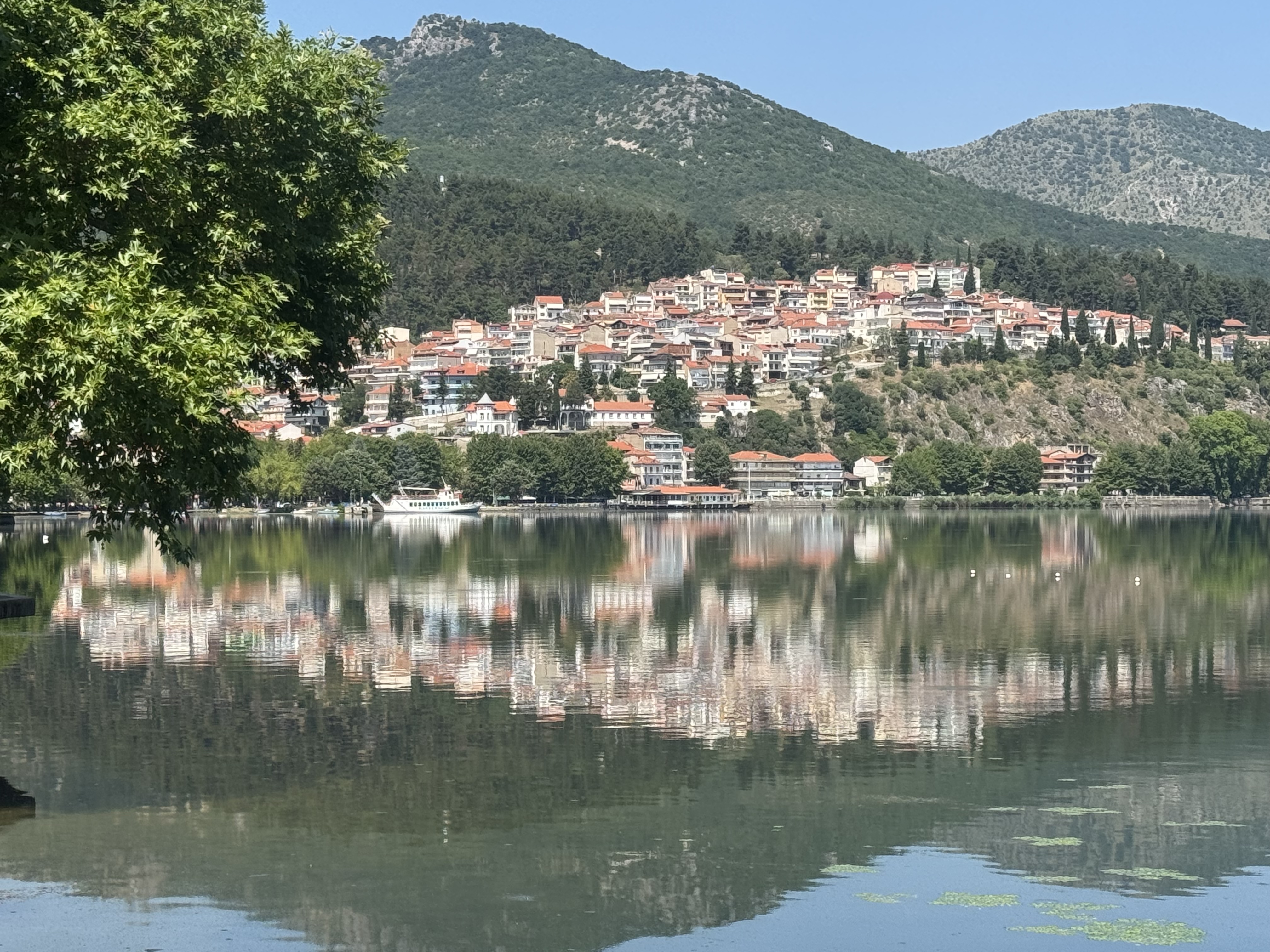
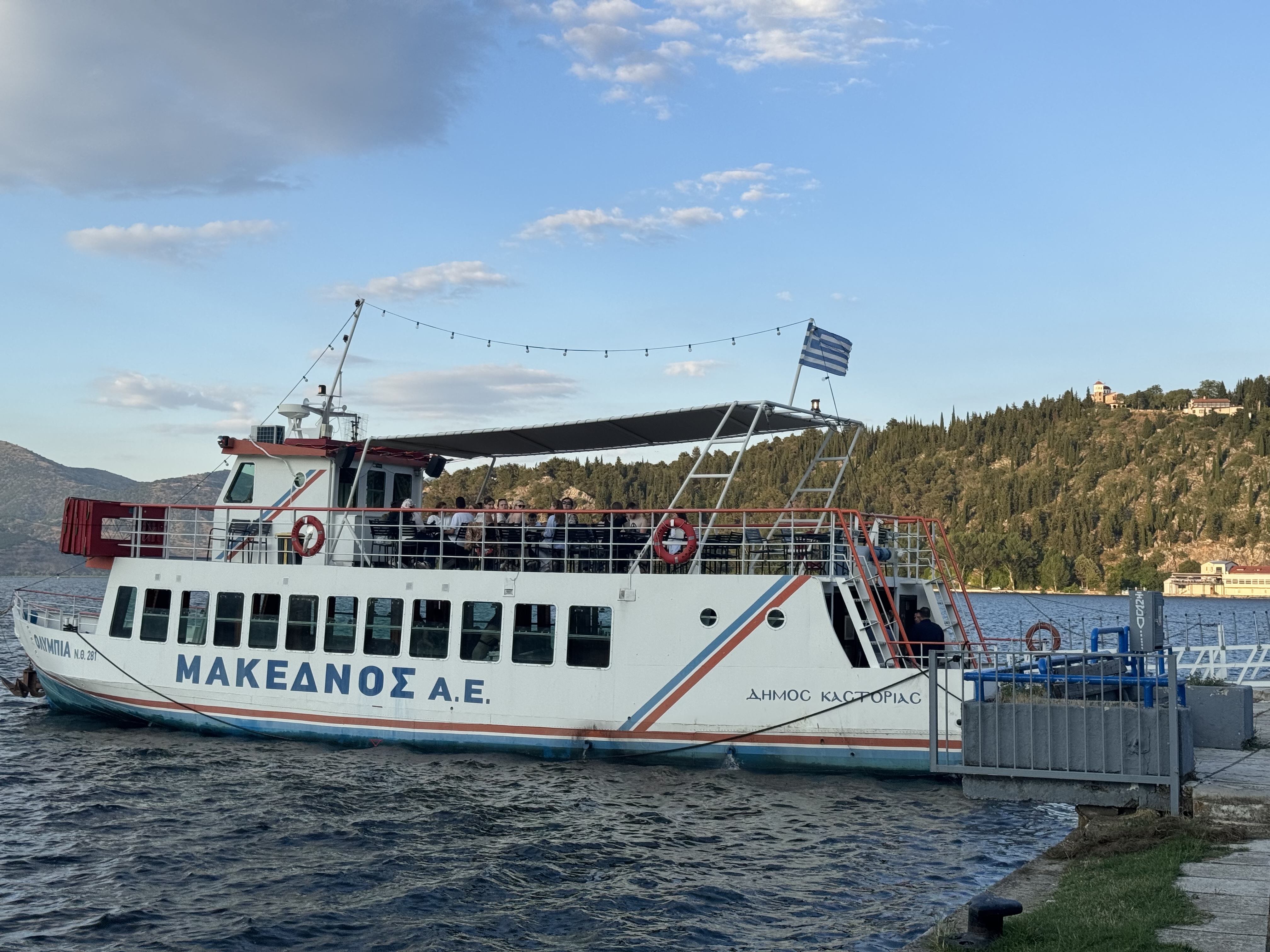 While the students worked on their projects during the day, we also had time to see the city. Kastoria's history is dense and visible (churches and historic buildings at nearly every turn) and we took a boat tour aboard the Olympia around the lake.
That boat tour fell on the Fourth of July, which meant I spent Independence Day celebrating a different kind of anniversary. The overlap felt appropriate. The food and the setting mattered more than they might sound. Kastoria's scale and pace create conditions for the kind of unhurried, intergenerational conversation that conferences in larger cities rarely sustain. If you want discussions like these, the environment has to cooperate and this one did.
 On my way to the airport, heading to Barcelona for the final leg of this trip, I shared a two-hour drive with Ludovic Blecher, former head of the Google News Initiative Innovation program and now a partner at WhiteBeard, a MENA-based technology company. We talked about the situation in the Middle East for most of it.
What we shared was a frustration: the media's persistent failure to address the political, historical, and cultural complexity of the conflict, defaulting instead to a binary and dramatic story that serves narrative convenience over understanding. Neither of us had a tidy solution. But the conversation was one of the more serious I've had on the subject in some time, and it was a fitting end to a week spent thinking about exactly this problem.
After working with the team at the Peace Journalism Lab for several years, it was a pleasure to finally meet and work alongside Marianna Tanagia, Apostolos Karampaglidis, Ioanna Georgia Eskiadi, and Erasmia Tsipou in person. A strong, committed team, and the reason THISAM has become what it is over ten years.
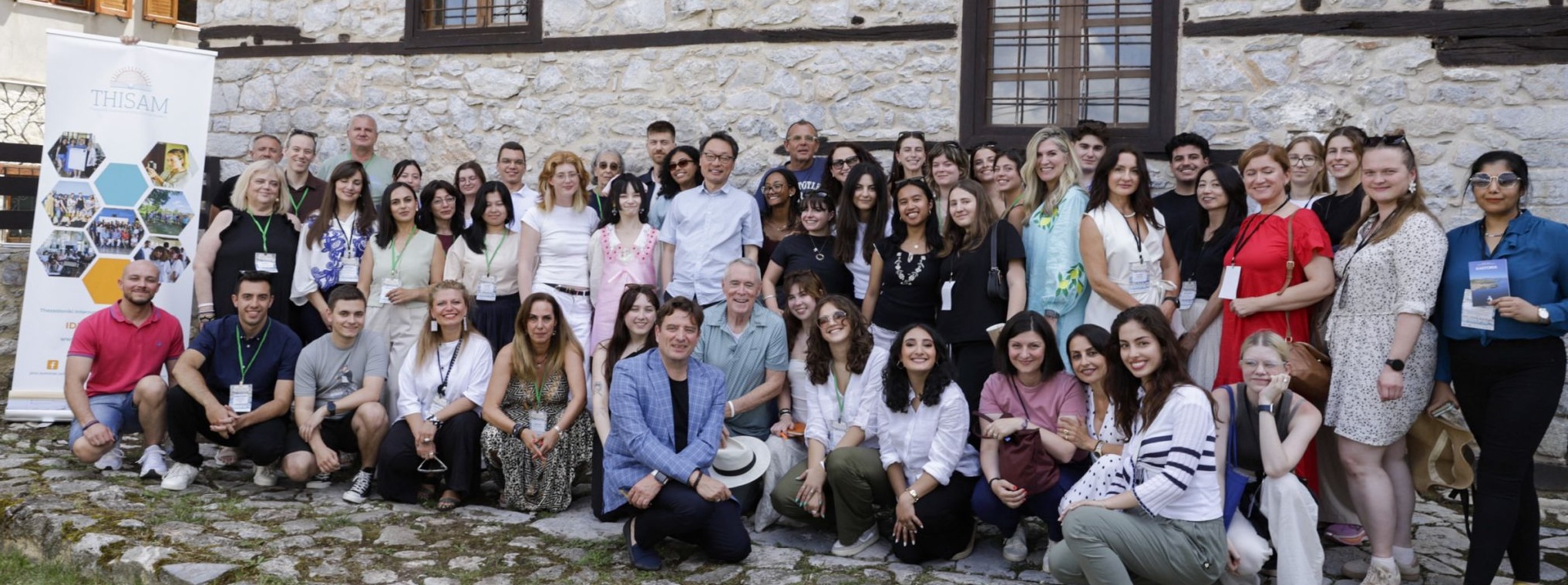
A week at THISAM made something visible that's easy to lose sight of: Professor Panagiotou and Professor Frangkonikolopoulos have assembled a group of faculty in journalism, peace, and media who are genuinely devoted to bringing the next generation into this work. And to holding them to the same standard of engagement with complex, nuanced, and culturally diverse issues that they hold themselves to.
That's harder to build than a curriculum, and it's the part that lasts.
For more on THISAM, see the academy's site and this press release on the tenth anniversary.
Comments(0)